

In-depth Analysis of the Development Prospect of Chinese Trucks in Overseas Markets
I. Market Overview: Sustained High Export Growth Entering an Accelerated Phase
Overall Volume: China exported a total of 686,500 trucks in the first half of 2026, representing a year-on-year increase of 44.69%. Exports reached 123,300 units in June alone, rising 50.03% year-on-year, with export value exceeding RMB 20 billion.Heavy-Duty Truck Segment: Annual heavy-duty truck exports hit a record high of 340,000 units in 2025. Exports are projected to reach 400,000 units in 2026, a nearly 19% year-on-year growth. From January to May 2026, 177,000 heavy-duty trucks were exported, up 40.4% year-on-year.Key Shift in Market Structure: Exports are no longer overly reliant on Russia, evolving toward diversified markets including Southeast Asia, Africa, the Middle East and Latin America. In H1 2026, heavy-duty truck exports to Africa stood at 95,000 units (+75.0%), Southeast Asia 50,000 units (+32.9%), and Latin America 17,000 units (+69.5%). These three regions jointly accounted for 81.7% of total exports.
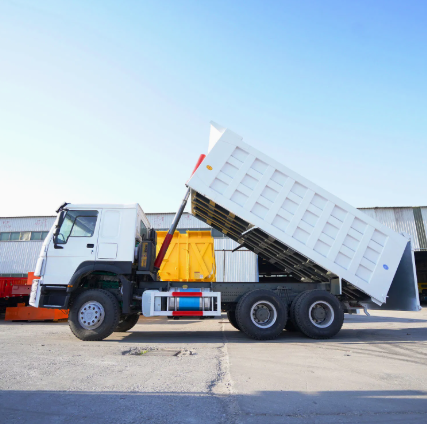
II. Core Growth Drivers: Four Engines Boosting Expansion
1. Infrastructure Boom in Emerging Markets + Sustained Demand Driven by the Belt and Road Initiative
Countries in Southeast Asia (Vietnam, the Philippines, Indonesia), the Middle East (Saudi Arabia, the UAE) and Africa (Nigeria, Tanzania, South Africa) are undergoing large-scale infrastructure construction. Roads, ports, mines and real estate generate robust demand for engineering trucks, dump trucks and tractors. Vietnam imported 47,785 fuel-powered trucks in the first six months of 2026, ranking first among destination markets.
2. Well-Matched Product Positioning: Cost-Effectiveness and Robust Performance
- Same-class Chinese heavy-duty trucks are priced at only 50%~60% of European and American brands, greatly shortening capital payback cycles for fleet operators.
- Optimized for harsh operating conditions such as high temperatures, sandstorms and unpaved roads; more resilient than sophisticated European and American trucks.
- Affordable spare parts and low maintenance thresholds, compatible with the repair ecosystem in developing economies.
3. Complete Industrial Chain + KD Localization to Break Tariff Barriers
China owns the world’s most comprehensive commercial vehicle industrial chain, covering engines, transmissions, axles, batteries and motors. Leading manufacturers (CNHTC, Foton, Sany, FAW) have built overseas CKD (Completely Knocked Down) assembly plants. This model avoids high tariffs on fully built vehicles, shortens delivery cycles, and facilitates the transformation from "product export" to "overseas capacity deployment".
4. New Energy Heavy Trucks: The Biggest Increment for Overtaking via New Tracks (See Section IV)
III. Prospect Assessment by Region
| Region | Performance in H1 2026 | Prospect Rating | Core Logic |
|---|---|---|---|
| Africa | 95,000 units, +75% | ⭐⭐⭐⭐⭐ | Infrastructure in initial stage, low demand base yet high growth rate; extreme price sensitivity; Chinese trucks face limited competition |
Southeast Asia | 50,000 units, +32.9% | ⭐⭐⭐⭐⭐ | Rapid economic growth; breakthroughs in right-hand-drive vehicle supply; surging demand for new energy trucks at ports and mines |
Middle East | Approximately 30,000 units | ⭐⭐⭐⭐ | Abundant oil capital; strong purchasing power driven by large infrastructure and mining projects; room for high-end model penetration |
Latin America | 17,000 units, +69.5% | ⭐⭐⭐⭐ | Mexico serves as a gateway to North America; robust mining demand in Peru and Chile |
| Russia | Noticeable decline | ⭐⭐ | Stricter localization requirements, rising scrappage taxes and tightened certification rules; profit margins of complete vehicle exports squeezed close to break-even |
Europe & North America | Minimal share | ⭐⭐ | High tariff barriers and s tringent certification standards; large-scale market access difficult in the short run, limited to pilot businesses |
IV. New Energy Heavy Trucks: Inflection Point from Trial Operation to Bulk Replacement
This is the most noteworthy variable in prospect analysis:Landmark Order: In June 2026, Sany Heavy Industry secured a single order for 883 electric heavy trucks. The volume of this standalone order exceeded the total export volume of new energy tractor units across the whole industry in 2025 (877 units), hailed in the industry as "one order surpasses full-year sales of last year".Growth Data:
- Exports of new energy commercial vehicles reached 83,000 units in 2025, surging by 86.8%.
- Sany Group forecasts that overseas orders for its electric heavy trucks will grow by over 50% year-on-year in 2026.
Overseas clients have shifted from "single-vehicle trial procurement" to "bulk replacement orders of thousands of units", marking a clear market inflection point.Core Application Scenarios: Closed and semi-closed sites including mines, ports, cement plants and steel mills. These routes feature fixed driving cycles, easy deployment of charging infrastructure, and remarkable energy cost advantages under heavy-load operations.China’s Unique Competitive Edge: European and American electric heavy trucks (e.g., Mercedes-Benz eActros) are priced at around EUR 400,000 with constrained production capacity. Benefiting from a complete battery industrial chain, Chinese electric heavy trucks cost merely 1/3~1/2 of their European and American counterparts, with far stronger delivery capacity.
V. Risks and Challenges (Objective Constraints)
Promising prospects do not eliminate hidden risks. The following challenges must be addressed:
1. Escalating Trade Barriers
- The U.S. imposed a unified 25% tariff on imported medium and heavy-duty trucks and related components starting November 2025, and keeps launching anti-dumping and countervailing investigations targeting products such as semi-trailers and truck covers.
- The EU levies an additional tariff of up to 35.3% on Chinese electric vehicles, bringing the total tariff rate to 45.3%, which drastically pushes up the landed cost of vehicles worth RMB 400,000 exported to Europe.
- Russia raised scrappage taxes and extended the OTTC vehicle type certification cycle from 6 months to 12 months, blocking channels for indirect certification, resulting in a halving of complete vehicle exports to Russia.
2. Insufficient Brand Premium
European premium brands including Scania, Mercedes-Benz and Volvo still dominate the high-end segments such as long-distance trunk logistics and time-sensitive cold chain transportation. Chinese trucks enter overseas markets relying on cost advantages, which leads to thin profit margins and risks of cutthroat internal competition.
3. After-Sales Service Network Remains Underdeveloped
Leading OEMs are accelerating the construction of overseas service stations, yet network coverage and response speed still lag behind century-old European and American brands. After-sales experience directly determines repurchase intentions of major fleet customers.
4. Geopolitical Risks and Exchange Rate Volatility
Geopolitical tensions such as China-U.S. frictions and the Russia-Ukraine conflict may trigger sudden sanctions or market closures. Currency volatility in emerging markets brings notable settlement and payment recovery risks.
5. New Compliance Rules on Carbon Footprint and Data Security
New types of trade barriers are emerging, including the EU Carbon Border Adjustment Mechanism (CBAM) and data security regulations. Future exports will need to satisfy increasingly rigorous compliance requirements.
VI. Phased Outlook
Short Term (2026–2027): Sustained High Growth & Structural Optimization
- Annual truck exports are expected to exceed 1.3 million units, with heavy-duty truck exports targeting 400,000 units.
- Africa and Southeast Asia will serve as primary growth drivers, while Russia’s share will keep declining.
- Bulk orders of new energy heavy trucks with thousands of units will become normalized.
Medium Term (2028–2030): Transition from Product Export to Brand Export
- The CKD assembly model will mature with improved local content rate. Business focus will shift from "selling vehicles" to "delivering integrated solutions (vehicles + charging/swapping facilities + financing + maintenance)".
- Penetration of new energy heavy trucks at global mines and ports will rise rapidly. Chinese brands are expected to capture more than 60% of the global electric heavy truck market.
- Top manufacturers will gradually build brand recognition and expand into mid-tier markets.
Long Term (Post-2030): Restructuring of Global Competitive Landscape
- For fuel-powered trucks: Chinese brands will gain dominant market share in developing economies and compete head-to-head with Japanese and European brands in mid-tier markets.
- For new energy trucks: Supported by the complete industrial chain, China is poised to achieve track overtaking, replicating the success of new energy passenger vehicles and become the leading player in the global electric heavy truck market.
- The biggest uncertainty lies in whether Chinese manufacturers can break into European and North American markets via local production bases and technical cooperation.
VII. Concluding Summary
The underlying logic supporting Chinese truck overseas expansion lies in the triple synergy of the world’s most complete industrial chain, track overtaking opportunities in new energy, and robust demand growth in emerging markets.In the short run, export growth will stay robust; in the medium run, industrial structure will upgrade; in the long run, the global competitive landscape will be reshaped. Nevertheless, three major hurdles — rising trade barriers, weak brand power and geopolitical uncertainties — must be overcome.Overall judgment: The development prospect is clearly positive, yet the expansion path will not be smooth. New energy vehicles will define the ceiling of China’s overseas truck business.