In-Depth Analysis of the Development Prospects of China’s Truck Overseas Market
I. Market Overview: Sustained Robust Export Growth, Restructured Market Landscape, Accelerated Globalization
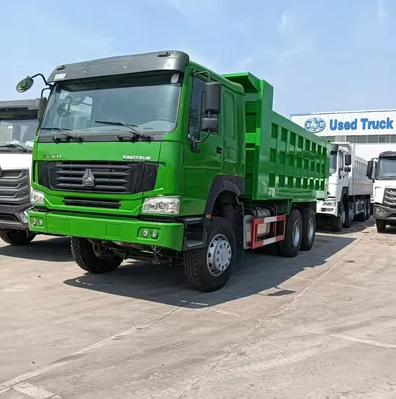
Overall Volume: In the first half of 2026, China’s truck exports reached 686,500 units, a year-on-year increase of 44.69%. Exports in June alone hit 123,300 units, rising 50.03% year-on-year, with export value exceeding RMB 20 billion.Heavy-Duty Truck Segment: Full-year heavy-duty truck exports hit a record high of 340,000 units in 2025. Institutions forecast that exports of heavy-duty trucks will reach 400,000 units in 2026, representing an approximately 19% year-on-year growth. From January to May 2026, heavy-duty truck exports stood at 177,000 units, surging 40.4% year-on-year.Core Shifts in Market StructureChina’s truck exports once relied heavily on the Russian market. Affected by Russia’s domestic industrial protection policies (higher import tariffs and local manufacturing requirements), export growth to Russia has slowed markedly. Export focus is rapidly diversifying, with Southeast Asia, Africa, the Middle East and Latin America emerging as four core growth hubs. Vietnam, Nigeria, Tanzania, Algeria and Mexico have posted prominent incremental demand, forming a multi-driver market landscape.Vehicle Type Mix: Fuel-powered trucks remain the fundamental market base. New energy trucks (battery electric, hybrid and gas-powered heavy-duty trucks) constitute the second growth curve, with rapidly rising orders for electric light trucks, electric mining trucks and electric tractors.II. Core Growth Drivers (Long-Term Positive Supports)
1. Distinct Comprehensive Product Competitiveness
- Full industrial chain cost advantagesChina boasts the world’s most complete commercial vehicle industrial chain with mature supporting systems for engines, transmissions and chassis. Chinese trucks are priced 20%–35% lower than European brands (Mercedes-Benz, Volvo, Scania) and feature shorter delivery cycles compared with Japanese trucks, matching the budget demands of customers in emerging markets.
- Strong capability for working-condition customizationManufacturers can quickly carry out modifications tailored to harsh operating environments: deteriorated road conditions in Africa, high temperature and heavy rainfall in Southeast Asia, desert climates in the Middle East, and mountainous terrain in Latin America. Customized solutions include enhanced heat dissipation, off-road chassis, large-capacity fuel tanks, natural gas variants and mining dump trucks. Standardized models from European and American brands lack such flexibility for adaptation.
- Differentiated barriers in the new energy trackChina has a complete supply chain for three core electric vehicle components. Technologies for electric heavy-duty trucks and electric light trucks are well-established. Overseas competitors face lengthy R&D cycles and high prices for electric trucks. In scenarios such as mining areas, ports and short-haul logistics, domestic new energy trucks capture market share thanks to lower Total Cost of Ownership (TCO).
2. Sustained Release of Global Market Demand
Large-scale infrastructure construction, mineral exploitation and logistics network development along the Belt and Road Initiative continuously drive demand for dump trucks and tractors.A large number of aging trucks in Asia, Africa and Latin America have entered the replacement cycle, while local domestic truck industries are underdeveloped with insufficient production capacity.Global carbon neutrality policies push countries to phase out highly polluting aging diesel vehicles, creating a window of opportunity for new energy trucks.3. Upgraded Overseas Business Model: From Complete Vehicle Exports to Systemic Global Expansion
In the early stage, manufacturers only exported finished vehicles. At present, leading enterprises (CNHTC, FAW, Foton, Sany) have set up KD (Knock-Down) assembly plants overseas (Algeria, Tanzania, Malaysia, etc.) to comply with localisation policies of host countries and avoid high tariffs on finished vehicle imports.Meanwhile, they build overseas dealer networks, service stations and spare parts centres, and launch supporting businesses including vehicle financing and used truck recycling. Competition has evolved from standalone product sales to ecosystem competition.III. Prospective Outlook by Region
Southeast Asia (Optimal Short-Term Track)
Sustained infrastructure investment in Vietnam, Indonesia, Thailand and Malaysia fuels robust demand for logistics and mining. Policies are relatively favourable, supporting dual growth of fuel-powered heavy-duty trucks and electric light trucks. Competition mainly comes from Japanese brands.Prospect: High growth; core incremental market in the short run.Africa (Fundamental Market)
Stable demand in Nigeria, Ghana, Tanzania and South Africa, with high price sensitivity and massive demand for fuel-powered engineering heavy-duty trucks. Chinese brands hold leading market shares.Constraints include foreign exchange shortages and underdeveloped infrastructure.Prospect: Steady growth; long-term fundamental market.Middle East and Central Asia
Demand for oil & gas transportation and infrastructure construction underpins sales of gas-powered heavy-duty trucks and tractors. Several countries are accelerating new energy transition. It is an advantageous market but exposed to high geopolitical volatility risks.Latin America (Potential Incremental Market)
Rising demand in Mexico, Peru and Ecuador, yet Brazil imposes high tariff barriers. European brands have long dominated the high-end long-distance transportation market, while Chinese trucks are making breakthroughs in the mid-to-low-end segment.Prospect: Huge medium- and long-term potential with elevated policy risks.Developed European and American Markets (Highest Entry Barriers; New Energy as Breakthrough Point)
Stringent WVTA certification, carbon tariffs, trade protectionism and channel barriers established by local brands hinder large-scale penetration of fuel-powered trucks. Electric heavy-duty trucks and special new energy vehicles for industrial parks represent the only viable breakthrough. Small-batch trials and demonstration projects will prevail in the short term; large-scale volume growth will take another 5–8 years.Russia and Eurasian Economic Union
The market retains considerable capacity, yet tightening domestic protection policies limit room for pure finished vehicle exports. Future opportunities lie in local KD factory construction.IV. Major Risks and Challenges (Unignorable Bottlenecks)
- Trade protection and policy barriersMultiple countries have raised import tariffs and introduced local manufacturing requirements. EU carbon tariffs and potential anti-dumping investigations launched by Europe and the US, alongside continuously adjusted automobile import policies in Mexico and some Southeast Asian nations, erode price advantages.
- Deficiencies in brand influence and after-sales serviceCustomers in high-end European and American markets have long-standing trust in European and Japanese truck brands. The density of overseas service outlets and spare parts inventory is far lower than established international manufacturers. For heavy-duty trucks as production equipment, inconvenient maintenance will significantly reduce purchasing willingness among fleet operators.
- Industry internal competition and profitability pressureDomestic manufacturers engage in cut-throat price competition overseas, which depresses overall market prices and fosters a negative impression of “low price and poor quality”. It also elevates risks of trade frictions.
- High costs for compliance certificationEuropean standards, US standards and emission regulations across different nations are incompatible. Vehicle certification entails heavy investment and lengthy cycles, placing burdens on small and medium manufacturers and continuously lifting thresholds for overseas expansion.
- Geopolitical risksExchange rate fluctuations, foreign exchange controls and political unrest in some regions bring risks of payment recovery.
V. Short-Term and Medium-to-Long-Term Outlook
Short Term (1–3 Years, 2026–2028)
General Judgement: Growth will remain relatively high yet gradually moderate; market diversification will deepen continuously.Exports of heavy-duty trucks will keep rising with steady total volume, and the main source of growth will shift from Russia to Southeast Asia, Africa and Latin America.Fuel-powered trucks will maintain mainstream status, while the export share of new energy trucks will keep increasing.Localised KD production will become standard practice for leading enterprises, and dividends from pure finished vehicle exports will fade.Competition will lead to market differentiation: leading manufacturers equipped with after-sales networks, financial solutions and local R&D capabilities will gain rising market share, while small and medium manufacturers relying merely on low prices will face mounting survival pressure.Medium-to-Long Term (3–8 Years, post-2029)
General Judgement: Growth will shift from “scale expansion” to “value upgrading”, and new energy will determine the upper growth limit.In emerging markets, Chinese trucks will consolidate their position in the mid-tier mainstream market and gradually capture sinking market share from European brands.An inflection point will emerge in the new energy heavy-duty truck track, creating opportunities to achieve global overtaking.Stable market tiers will take shape. Leading enterprises will build global brands and complete the transformation from “Made in China” to globally operated brands.Ceiling constraint: Full-scale breakthroughs in developed markets remain difficult. The upper limit of global market share hinges on overcoming three major hurdles: certification, after-sales service and brand building.VI. Conclusion
Overall Prospect: Opportunities outweigh risks with broad long-term potential, yet growth will not sustain uninterrupted momentum.In emerging markets including Southeast Asia, Africa, the Middle East and Latin America, Chinese trucks maintain sustained expansion capacity supported by cost performance, customisation capability and new energy advantages, representing the track with the highest certainty.Fuel-powered trucks can only compete for mid-tier market segments. Electrification and intelligentisation are the only avenues to break into the global high-end market.Future competition will no longer focus merely on vehicle pricing. Localised factories, after-sales networks, financial support and compliance capacity will constitute core competitiveness.Risk Reminder: Watch out for periodic shocks triggered by rising global trade protectionism, commodity price volatility and overseas geopolitical conflicts.