

Core Reasons for the Widely Recognized Chinese Trucks Overseas
Chinese trucks are mainly exported to Southeast Asia, the Middle East, Africa, Central Asia and Latin America, while gradually penetrating mid-to-high-end markets including Australia and Eastern Europe. Primary customers consist of logistics fleets, infrastructure contractors and mining enterprises. Fundamentally, their popularity stems from superior performance as production tools: lower comprehensive operating costs, strong adaptability to local working conditions and flexible delivery solutions. A comprehensive analysis covering competitive strengths, inherent limitations and market context is presented below:
I. Core Competitive Advantages
1. Outstanding Cost Performance with Significant Gaps in Vehicle Purchase and Maintenance Expenses
Comparable European and American heavy-duty trucks (Mercedes-Benz, Volvo, Scania) generally command a 40%–80% higher price, while Japanese truck models cost over 20% more than their Chinese counterparts.- Procurement cost: Lower landed prices of Chinese heavy trucks ease upfront capital pressure for fleets.
- Spare parts cost: Mass local production of components keeps part prices far below those of imported vehicles, eliminating lengthy overseas lead times for spare parts orders.
- Maintenance accessibility: Designs balance durability and serviceability; ordinary local mechanics in developing countries can carry out repairs. By contrast, imported trucks feature highly integrated architecture and numerous proprietary electronic control systems, and qualified maintenance technicians are scarce.
2. Robust Build Suited for Harsh Road Conditions in Emerging Markets
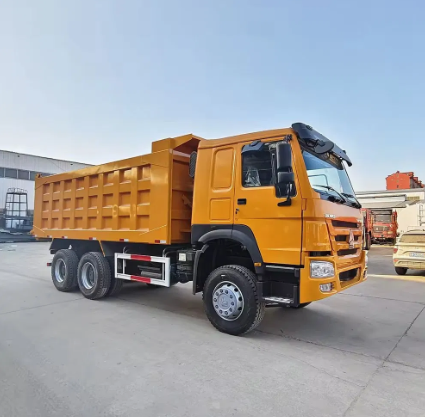
Numerous unpaved roads, mines and construction sites across Africa, Central Asia and Southeast Asia pose severe operating conditions:Chinese trucks are developed to tackle mountainous terrain, heavy loads and rough roads domestically, featuring reinforced chassis frames, suspension systems and cooling assemblies.Customized upgrades are available: enhanced cooling systems for high temperatures in the Middle East, waterproof modifications for rainy regions, and factory-built right-hand-drive variants for relevant markets.Dump trucks, mining engineering vehicles and muck trucks represent flagship product lines, widely preferred for infrastructure and mining projects in many regions.3. World’s Most Complete Industrial Chain Enables Flexible Delivery and Strong Customization Capabilities
China boasts the globe’s most integrated commercial vehicle supply chain, with all core components — engines, transmissions, axles and superstructures — manufactured domestically.- Full product portfolio: Light-duty trucks, medium-duty trucks, tractors, dump trucks, mixers, tankers and new-energy vehicles available under one supply system.
- High flexibility for customization: Rapid adjustments to horsepower, wheelbase, cargo body specifications and emission standards (Euro 3 / Euro 5 / Euro 6).
- CKD (Complete Knock-Down) assembly model: Overseas assembly plants help importers avoid high tariffs on fully built vehicles and shorten delivery cycles. Brands including Sinotruk, Foton and FAW have established dozens of overseas CKD factories.
4. Overtaking Competitors on the New Energy Track (Key New Growth Driver)
European and American automakers lag in electric heavy truck development, and their products carry exorbitant price tags. China owns a complete supply chain for batteries, motors and electronic control systems.Mass volumes of battery electric trucks, battery-swappable heavy trucks and electric light trucks have been exported to ports in Southeast Asia and mining sites in the Middle East.Turnkey integrated solutions are offered: vehicles paired with charging / battery swapping stations plus full operation and maintenance services.Such solutions align with global carbon neutrality initiatives, helping overseas enterprises avoid carbon taxes and delivering far lower long-term energy costs compared with diesel vehicles.5. Long-term B&R Initiatives Drive Continuous Improvement of Service Networks
The industry has evolved from merely vehicle sales to systematic overseas expansion:Dealer networks, centralized spare parts warehouses and service stations have been built worldwide;Local technician training programs address the longstanding pain point for overseas customers — easy vehicle purchase yet difficult maintenance.Geographical proximity facilitates logistics and smooth trade communications for markets in Central Asia and Southeast Asia.6. Generous Standard Configuration with No Mandatory Premium Optional Extras
At equivalent price points, Chinese trucks come standard with spacious cabs, suspension seats, AMT automated transmissions, 360° panoramic cameras, retarders and ADAS advanced driver assistance systems.Many comfort and safety features on European and American imported trucks incur substantial additional costs as optional extras.II. Objective Limitations (Why European and American Brands Dominate Premium Long-Haul Markets)
A rational perspective is essential: Chinese trucks do not outperform rivals across all segments.Top imported heavy trucks retain marginal advantages in fuel efficiency for long-distance highway transport and durability over one-million-kilometer service cycles.Gaps remain against premium European brands in precision manufacturing, electronic control system stability and interior fit-and-finish quality.Limited brand heritage: European and American trucks enjoy higher recognition in premium cold chain logistics, high-value long-distance freight and developed markets.Stringent certification standards in Western economies (European WVTA, US EPA) incur steep compliance costs, creating high barriers to entry into mainstream European and American markets.Simplified Market Segmentation Overview
- Africa, Southeast Asia (infrastructure, mining, general freight; small & medium fleets): Chinese trucks preferred (prioritizing cost, heavy-load capacity and ease of maintenance)
- Premium long-haul transport and time-sensitive cold chain logistics in Europe: Scania, Mercedes-Benz and other imported trucks remain widely adopted